Il Castello di Celsa
Eight centuries of history spanning architecture and noble families
Historical Notes
From Medieval origins to the present day
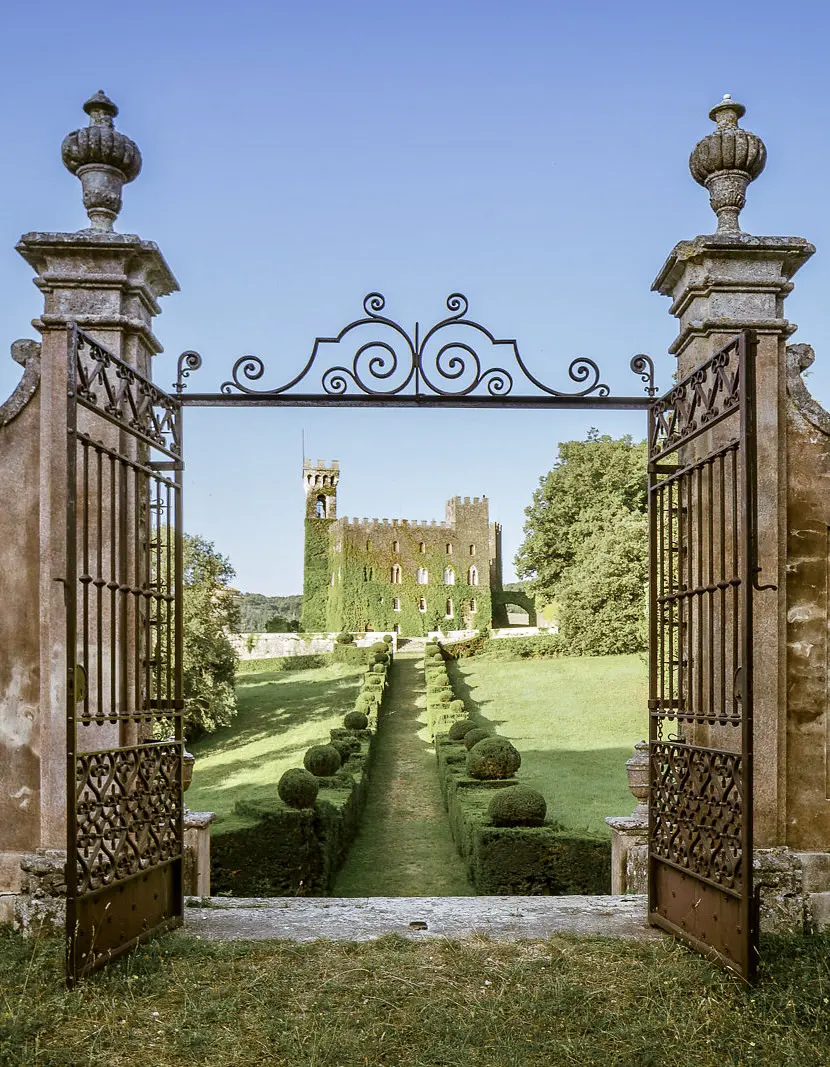
The Castello di Celsa stands in a splendid location among centuries-old woods on a hill that dominates the valley all the way to Siena. A variant of the Via Francigena, which leads from Colle Val d’Elsa to Siena, passes along its slopes.
The name Celsa probably derives from “excelsa sedes Virginis” (“exalted seat of the Virgin Mary”), or from the Sienese Celsi family, who owned it for a long time.
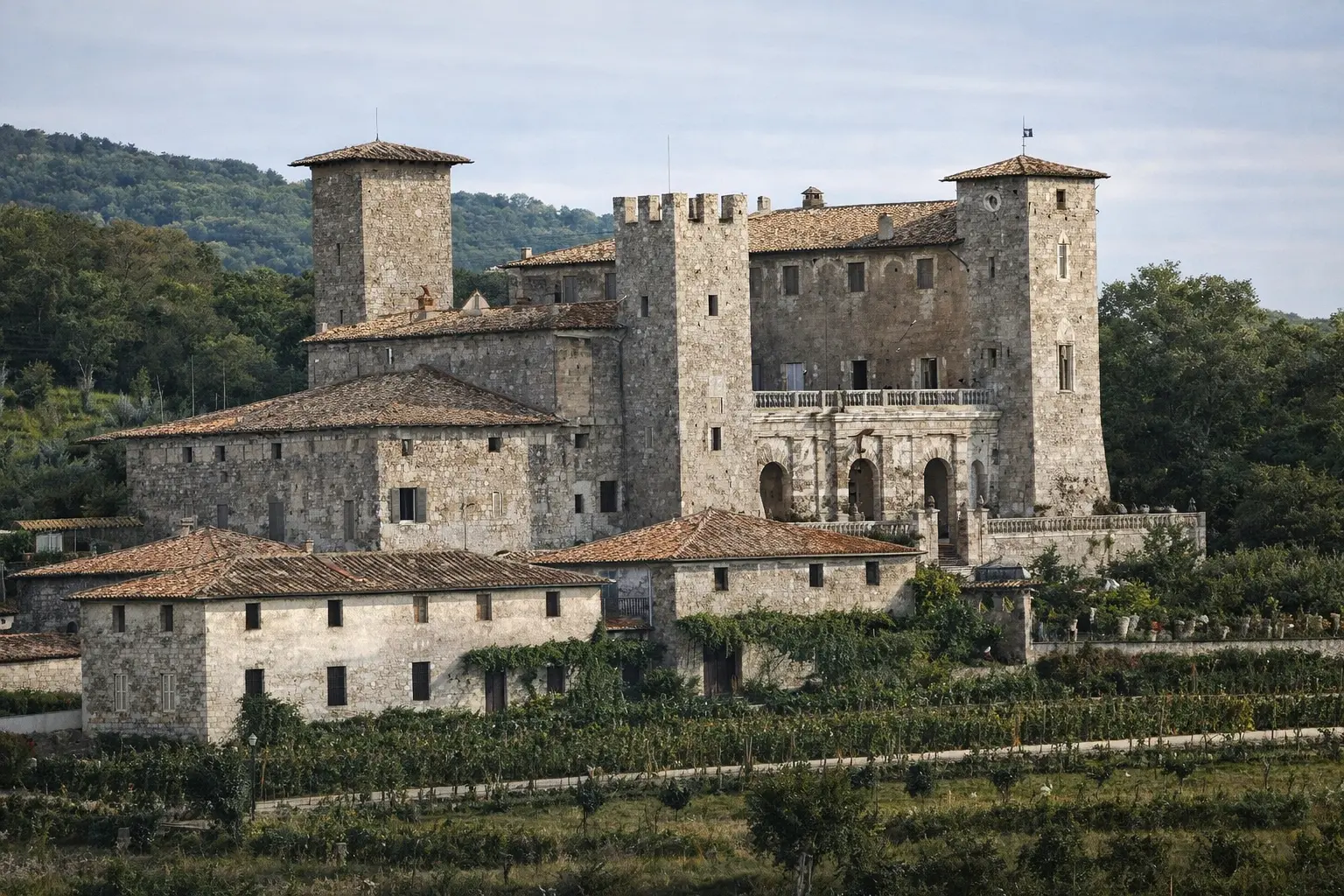
The architecture of Celsa demonstrates a complex layering of styles, reflecting its transition from a medieval fortress into a Renaissance villa, and subsequently incorporating elements of Neo-Gothic revival and sophisticated garden architecture.
Celsa originated as a defensive fortress of the Republic of Siena in the 13th century; it was then transformed into a renaissance residence by the Sienese Celsi family, in the sixteenth century. The Architect Baldassarre Peruzzi is widely credited with designing the property and transforming it from a self-contained defensive structure into the open form of a residential villa. Evidence of his intervention includes the circular-plan chapel and the external arrangement of the terracing wall, which runs parallel to the access avenue.
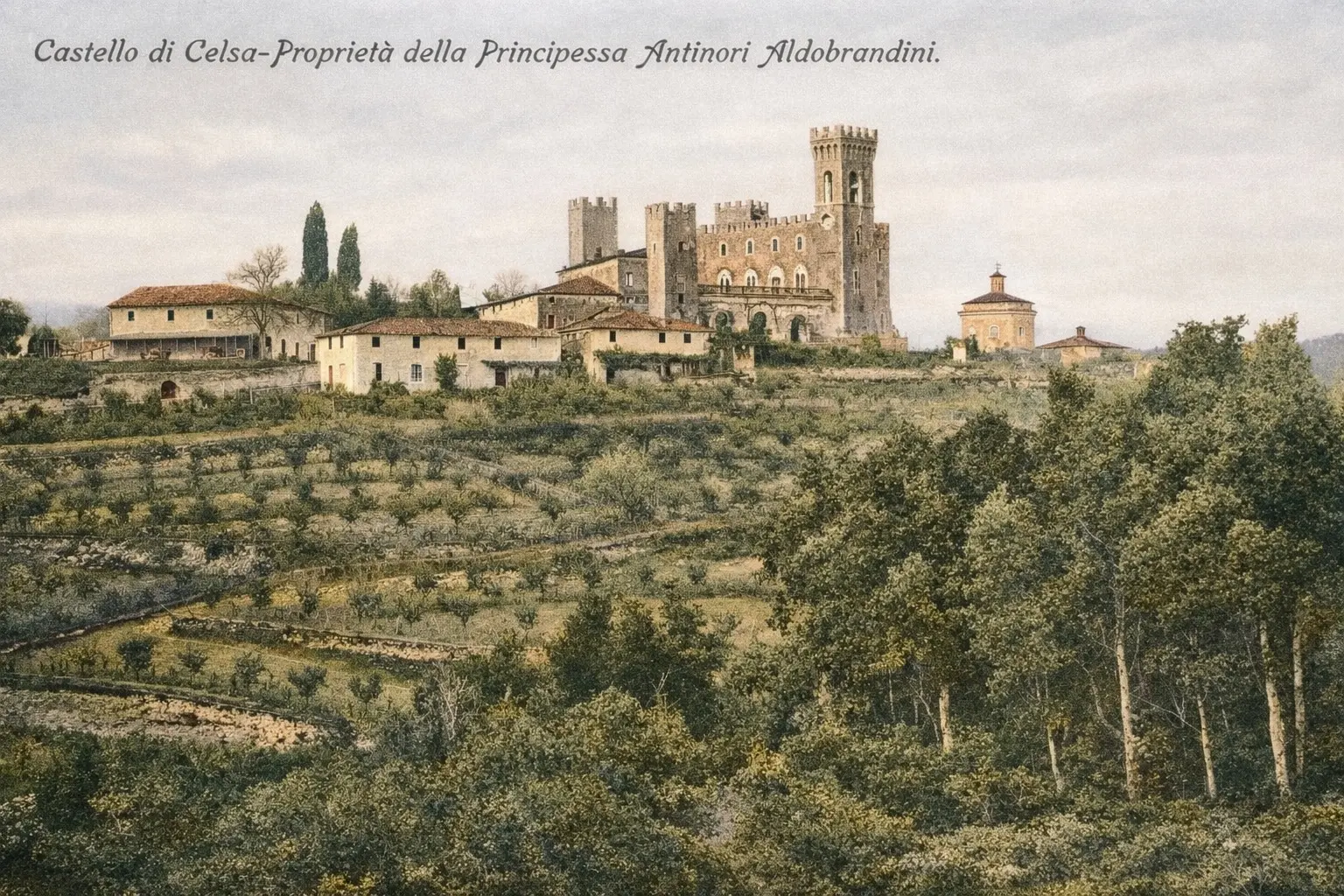
After being devastated by the imperial troops of Charles V in 1554, Celsa passed to the Sienese De Vecchi family at the beginning of the 1600s, who likely created the Baroque gardens. Towards the end of the nineteenth century, Maria Antinori Aldobrandini, daughter of Giulia De Vecchi and great-grandmother of the current owners, commissioned the Architect Mariani to carry out a further transformation of the castle, raising the height of the east tower and crowning it with battlements according to the prevailing Neo-Gothic taste of the era, bringing the building to its current form. Celsa passed again via the female line to the Roman Aldobrandini family, who, during the 20th century, focused their efforts on restoring the Italian garden (“Giardino all’italiana”) and the park to their original appearance.
Further Insights
Between Architecture and Landscape
The history of Celsa reflects its strategic importance in the Sienese territory and its transformation from a purely military fortification into a refined Renaissance villa.
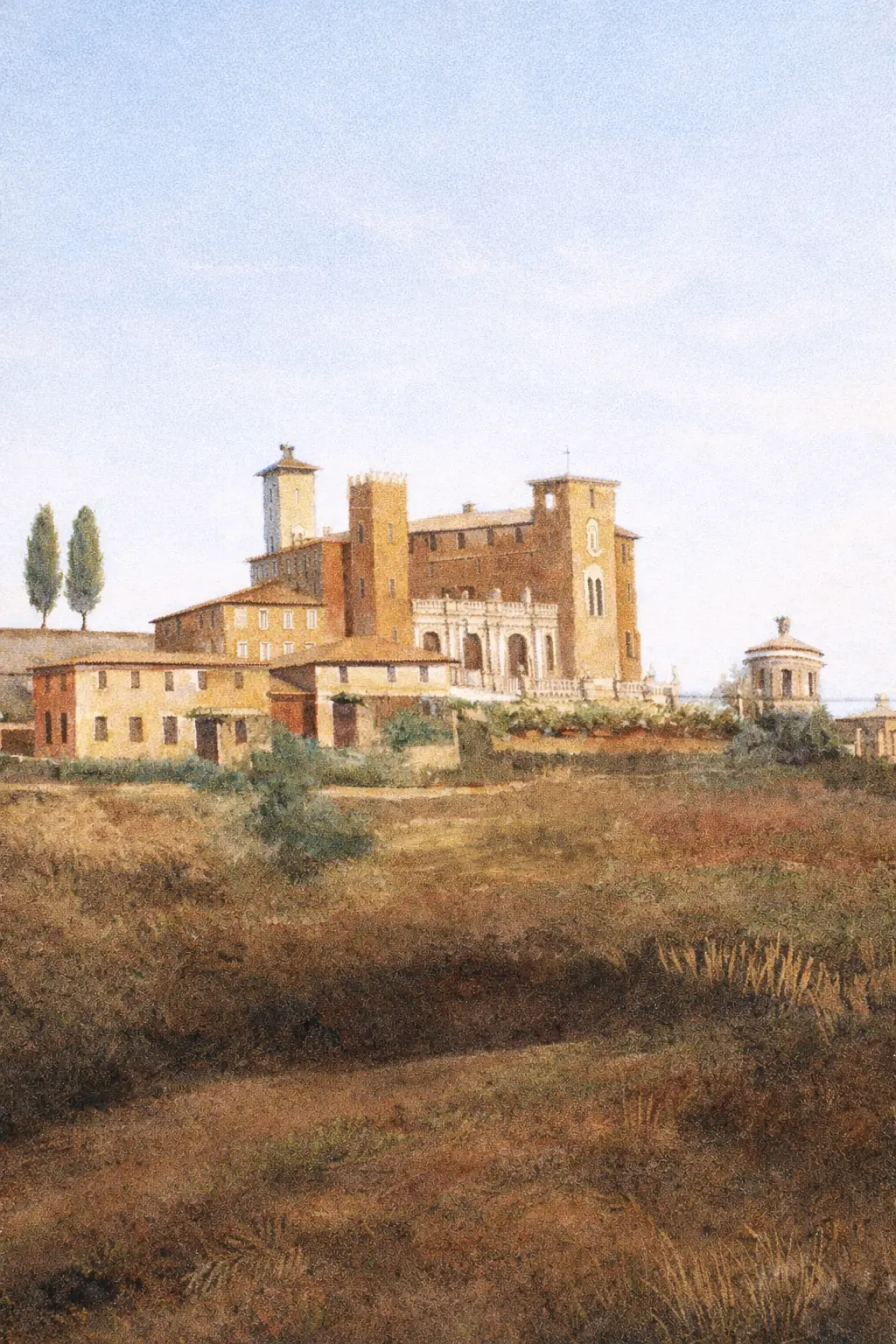
Medieval and Early Origins (12th – 15th Centuries) – Celsa originated as a fortress
Oral tradition attributes the foundation of the original settlement to Matilde di Canossa, Countess of Tuscany, in the 12th Century, when it was intended as a hunting lodge. However, the first documents attesting to its existence date back to the 13th century: Celsa was long a somber fortified structure that dominated the valley and the plain up to Siena, performing a territorial control function from that privileged position.
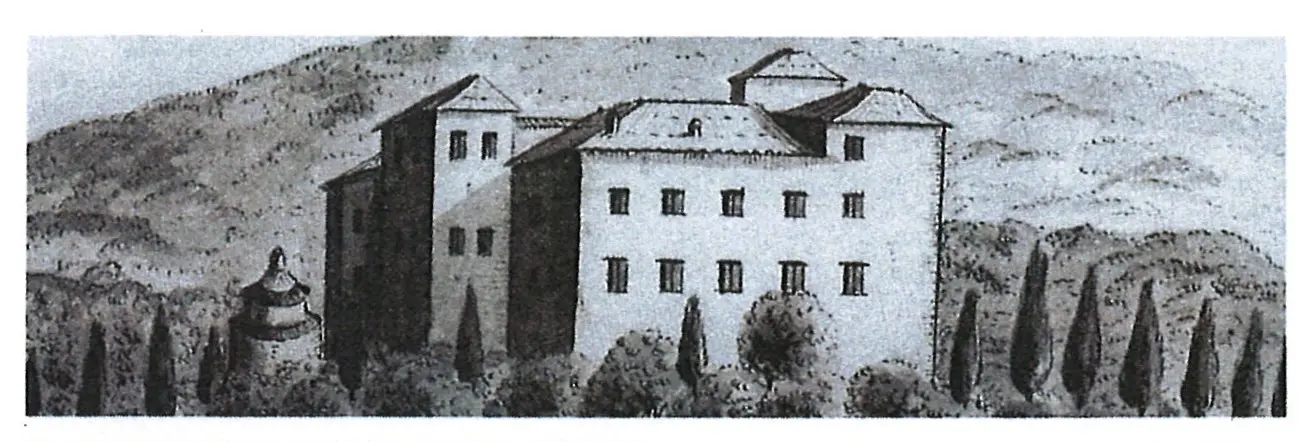
The Renaissance Transformation (16th Century) - The transformation of the fortress into a villa
During the first half of the 16th century, the noble Sienese scholar and academic Mino Celsi transformed the medieval fortress into a stately Renaissance villa. The restoration work is traditionally attributed to the famous architect Baldassarre Peruzzi, who was born nearby. Celsi requested modifications to “free the imprisoned house and allow it to be impregnated with sun and light”, as reported by Shepherd and Jellicoe (Italian Gardens of the Renaissance, E.Benn, 1925). The authors, who visited the property in the 1920s, added that “the delicate magic of Peruzzi’s hand has touched the original walls, emphasising their strength through the lightness of the additions in a way that is a revelation in the art of transforming the formal into the informal”.
Peruzzi’s intervention would therefore involve the circular-plan chapel in front of the castle, the terracing support wall with niches, parallel to the access avenue, and the structure of the Italian garden in front of the main building.
The architectural genius of the project—which aligns with the Renaissance tradition of intervening on fortified buildings from the Middle Ages to adapt them to new functions—lies in its ability to absorb that ancient and austere fortified structure into a completely new spatial discourse.
As well represented by Cresti and Listri (Civiltà delle Ville Toscane, Magnus Edizioni, 1992), “…the sixteenth-century intervention, apparently limited to superficial cosmetic changes, managed to regularize the previous convergence towards the mountain of the two opposing buildings [the two symmetrical castle buildings that give it the trapezoidal shape], thus producing a suggestive and strong scenographic impression, and to combine the old complex and the new appendices in a unitary space that is decidedly more ‘modern’ and imposing”.
The successful transformation into a quiet, shady residence allowed Mino Celsi to invite the Archbishop of Siena, Francesco Bandini Piccolomini, to seek rest there, using these words:
“You, my coarse and uncultivated little song / Return to Celsa, and ensure, / That my quiet is not taken from you”.
However, in 1554, Celsa was devastated by the Austro-Spanish imperial troops of Charles V.
After the Celsi family, the property passed to the noble Sienese family De Vecchi in the early 1600s, who presumably restored it and built the Baroque Park, called “il Rocco”.
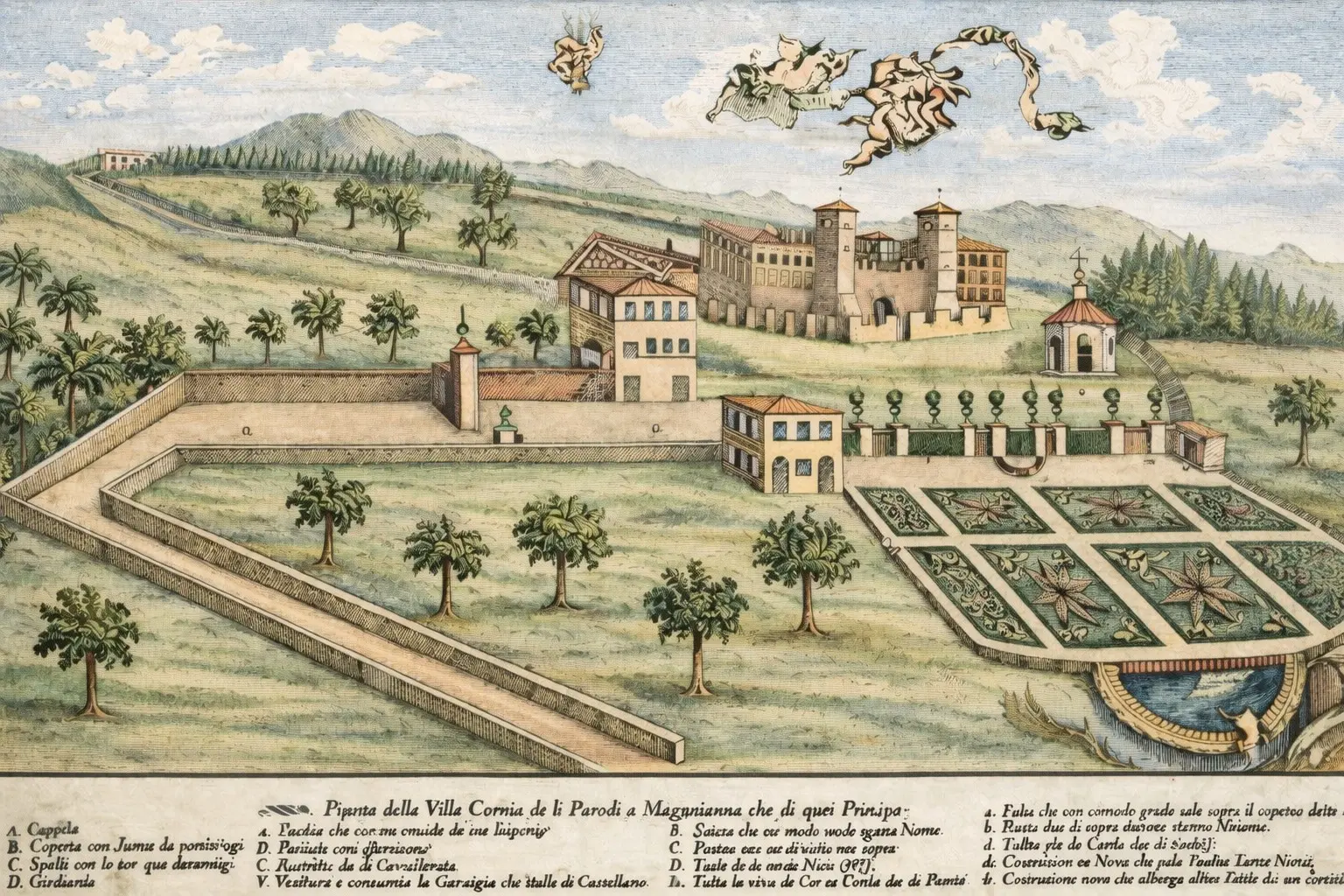
The Neo-Gothic Revival (19th – 20th Centuries)
The De Vecchi family remained the owners until the mid-1800s when it was given as a dowry by Giulia De Vecchi for her marriage to the Marquis Amerigo Antinori.
At the end of the 19th century, Maria Antinori, daughter of Giulia De Vecchi, married the Roman prince Giuseppe Aldobrandini, and in those years commissioned the architect Mariani for further changes in the Neo-Gothic style, typical of that era. This involved raising and crenellating the east tower and the entire building, opening lancet windows and scraping off plaster to expose the medieval stones.
Later, their son Clemente Aldobrandini and his wife, Luisa von Welczeck, a passionate and expert gardener, restored the original formal design of the park and the Italian garden (giardino all’italiana).
Bibliography
A tour of Italian gardens, Judith Chatfield (Rizzoli) • The best gardens in Italy – A traveller’s guide, Kirsty McLeod (Frances Lincoln) • I giardini d’Italia, Bianca Marta Nobile (Calderini) • I giardini di Firenze e della Toscana, Mariachiara Pozzana (Giunti) • Ville e giardini d’Italia, Alberta Campitelli (Jaca Book) • Giardini Italiani – Dalla Toscana alla Sicilia – vol. 2, Gianluca Simonini (Idealibri) • The garden lover’s Guide to Italy, Penelope Hobhouse (Princeton Architectural Press) • A tour of Italian gardens, Judith Chatfield (Rizzoli) • Introduzione ai giardini del senese, AAVV (Biblioteca Comunale San Quirico d’Orcia) • Dizionario Geografico Fisico Storico della Toscana – vol.1, Emanuele Repetti • Baldassare Peruzzi e le ville senesi del ‘500, Isa Belli Barsali (Archivio comunale dell’arte dei giardini) • Baldassarre Peruzzi – pittura scena e architettura nel ‘500, Marcello Fagiolo, Marialuisa Madonna (Enciclopedia Italiana) • Baldassare Peruzzi e le sue opere – Ville Peruzziane nel Senese, Fausto Landi Cantagalli) • Villas of Florence and Tuscany, Harold Donaldson Eberlein (Lippincott) • Italian Gardens, Giorgina Masson (Thames and Hudson) • Giardini di Toscana, AAVV (Edifir – Regione Toscana) • Ville italiane e loro giardini, Edith Wharton (Passigli Editore) • L’art de vivre en Toscane, Bruno Racine, Alain Fleischer (Flammarion) • Giardini all’italiana, Gunther Mader, Laila Neubert Mader (Rizzoli) • Civiltà delle Ville Toscane, Carlo Cresti, Massimo Listri (Magnus) • Great houses of Italy: the Tuscan Villas, Harold Acton (The Viking Press) • Italian gardens of the Renaissance, J.C. Shepherd e G.A. Jellicoe (Academy Edictons) • Tesori segreti delle campagne toscane, Bruno Bruchi (Editori dell’Acero) • Giardini in Toscana, Foto di M. Listri (Pagliai Polistampa) • Fortificare con Arte, Ettore Pellegrini (Betti) • Vedute dei contorni di Siena, Ettore Romagnoli (Betti) • Orologi da torre storici della Provincia di Siena, Renzo Giorgetti (Gelli) • Places I Love, Oscar de la Renta
Weddings
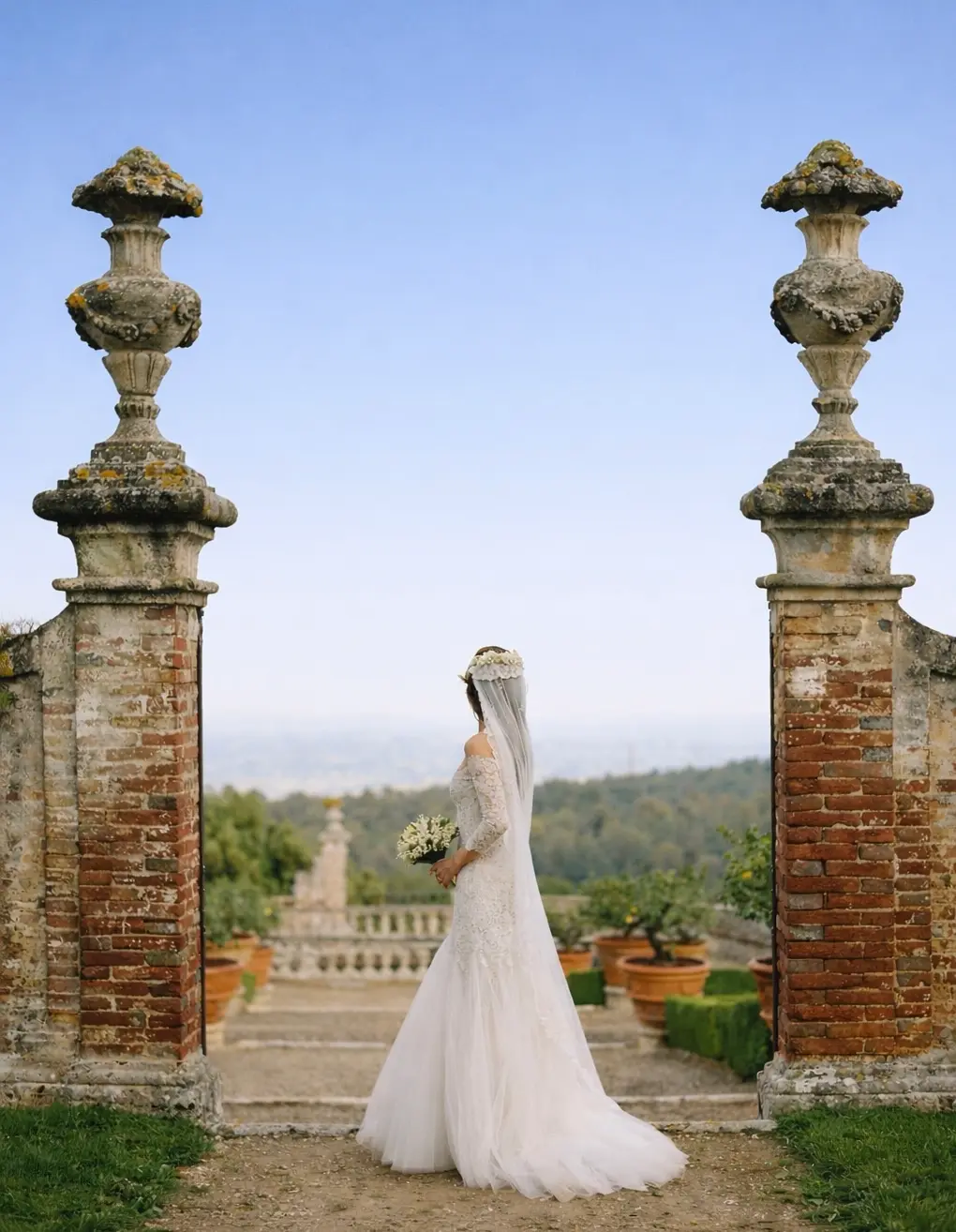
Celebrate an unforgettable wedding